


Bezpośrednia wpłata
PAH'S AID IN SYRIA
In 2024, Syria’s more than 14-year-long civil war came to an end. However, peace does not mean the end of the humanitarian crisis.
Key data
2013
2012
2011
2010
2009
2008
2007
2006
2005
2004
2003
2002
2001
2000
1999
1998
1997
1996
1995
1994
1993
1992
1991
1990
1989
1988
1987
1986
1985
1984
1983
1982
1981
1980
1979
1978
1977
1976
1975
1974
1973
1972
1971
1970
1969
1968
1967
1966
1965
1964
1963
1962
1961
1960
1959
1958
1957
1956
1955
1954
1953
1952
1951
1950
1949
1948
1947
1946
1945
1944
1943
1942
1941
1940
1939
1938
1937
1936
1935
1934
1933
1932
1931
1930
1929
1928
1927
1926
1925
1924
1923
1922
1921
1920
1919
1918
1917
1916
1915
1914
the beginning of our on-site activities
16,5 mln
15,5 mln
14,5 mln
13,5 mln
12,5 mln
11,5 mln
10,5 mln
9,5 mln
8,5 mln
7,5 mln
6,5 mln
5,5 mln
4,5 mln
3,5 mln
2,5 mln
1,5 mln
number of people in need of humanitarian aid (in 2025)
45,000
44,000
43,000
42,000
41,000
40,000
39,000
38,000
37,000
36,000
35,000
34,000
33,000
32,000
31,000
30,000
29,000
28,000
27,000
26,000
25,000
24,000
23,000
22,000
21,000
20,000
19,000
18,000
17,000
16,000
15,000
14,000
13,000
12,000
11,000
10,000
9,000
8,000
7,000
6,000
5,000
4,000
3,000
2,000
1,000
the number of people who have received aid in 2024
1,9 millionPLN
the cost of humanitarian aid provided in 2024

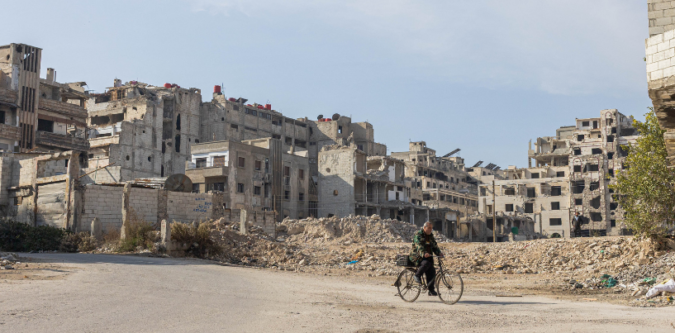
A year has passed since the end of the terrible civil war in Syria. For millions of people, this change has meant a relief that is still marked by uncertainty and fear for the future. However, the return to normality is illusory – after 14 years of conflict, most of the country’s buildings are in ruins, schools and hospitals do not function, and fields and roadsides are strewn with mines.
The humanitarian situation in Syria

As of 8th December 2024, more than 3.2 million Syrians have returned to their country or their hometowns. This means that half of the world’s largest refugee group has already decided to return. Many people do so, driven by the hope of a breakthrough, but returning home often means confronting an extraordinary level of destruction.


The situation in Syria remains critical:

  • 40% of the entire country’s infrastructure was completely destroyed, including many cities: Aleppo 40%, Homs 45%, Damascus 40%, Dajr az-Zaur 85%.
  • Partly or completely destroyed water and sanitary infrastructure,
  • Partly or completely destroyed electrical infrastructure – there is no permanent current supply throughout Syria. In large cities, electricity is switched on for a few hours a day. Houses not connected to the grid rely on solar panels and power generating units,
  • Hospitals have also been targets of attacks – medical care is very limited,
  • An insufficient number of schools, overcrowded classes (60 people in a class),
  • No preparations for winter in camps, ruined houses or cities,
  • Terrible condition of roads, especially in suburban areas,
  • Lack of documents – people fled their homes suddenly and most did not take their documents with them, which makes it difficult to claim ownership,
  • The need to standardize documentation in the country (different ID cards, driving licences, etc.).

PAH’s current activities in Syria

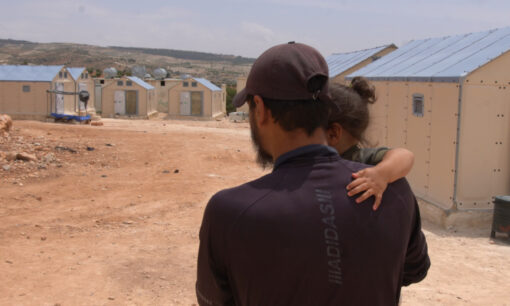
Currently we provide access to drinking water for 20,000 IDPs living in 20 camps in north-western Syria. We also provide them with hygiene items and parcels with products that help to maintain personal dignity. We run awareness sessions on general and menstrual hygiene. We also take care of sanitary conditions by emptying toilets in the camps.


We remain ready to provide support where it is needed most. We encourage you to work together to build a sustainable and secure future for Syria.


In order for Syrian families to look to the future with hope, our humanitarian aid must continue – not just here and now, but in the long term.

PAH’s previous activities in Syria

Polish Humanitarian Action (PAH) supported the people of Syria during the civil war. Between 2013 and 2019, we provided immediate and long-term aid, including food, basic necessities and safe shelter, in an effort to operate in the very difficult conditions of armed conflict.


PAH returned to Syria after the 2023 earthquake that struck large parts of southern Turkey and northern Syria. We provided affected people with hygiene packs (with hygiene items and water), blankets and mattresses, warm ready meals and warm clothing, including thermal underwear and fleece. In co-operation with Better Shelter, we have erected 6 temporary reception centres in several cities and villages in the Idlib province for a total of 300 people who lost their homes in the earthquake. We also provided psychological support there.


We also repaired damaged water and sanitary infrastructure in IDP camps and cities and villages in the north-west of the country. Thanks to PAH, more than 100,000 people have gained access to clean water in Hazzan and Jisr ash-Shughur and in the Rajah sub-district. We also funded training courses and grants to develop our own businesses and helped to relaunch a school in one of the camps.

PAH's aid in Turkey and Syria

A powerful earthquake measuring 7.8 on the Richter scale on 6 February 2023 devastated southern Turkey and northern Syria. The tremors were also felt in neighbouring countries. In total, more than 52,000 people lost their lives and 1.5 million people were made homeless. Learn more about PAH activities.

Read more
How can you help?

Your donation means safe water, essential supplies and other critical aid  for those affected by the humanitarian crisis in Syria. Every zloty donated to PAH is aid to those facing the most difficult living conditions. Together we can do more! Donate to PAH:

Direct donation:
Our current projects in Syria
Contact:
Tell us how we can work even more efficiently. Establish cooperation with us. Let's realize a project together!
Dane są podawane dobrowolnie, ale są konieczne do przekazania darowizny za pośrednictwem PayU.
Darowiznę można przekazać także bez pośrednictwa PayU za pomocą przelewu tradycyjnego, sprawdź numer rachunku tutaj.